The maths drives the motion
Gear ratios, valve timing, clutch slip, coolant flow, charging current: each one is computed by a separate, tested simulation, and the drawings only show what it computes. If an animation is wrong, a test fails.
Interactive course
The Automotive Engineering Academy is a course in automotive mechanical engineering that runs in your browser. It starts with forces, torque, energy and materials, and works up through every system of a car until you can follow, and help assemble, a complete powertrain.
Nothing on screen is drawn to look right. Every piston, gear, valve and spark moves because a tested mathematical model says it should, so what you see is what the engineering does.
Opens in this tab. The course loads about 7 MB, mostly 3D models, so give it a moment on a slow connection.
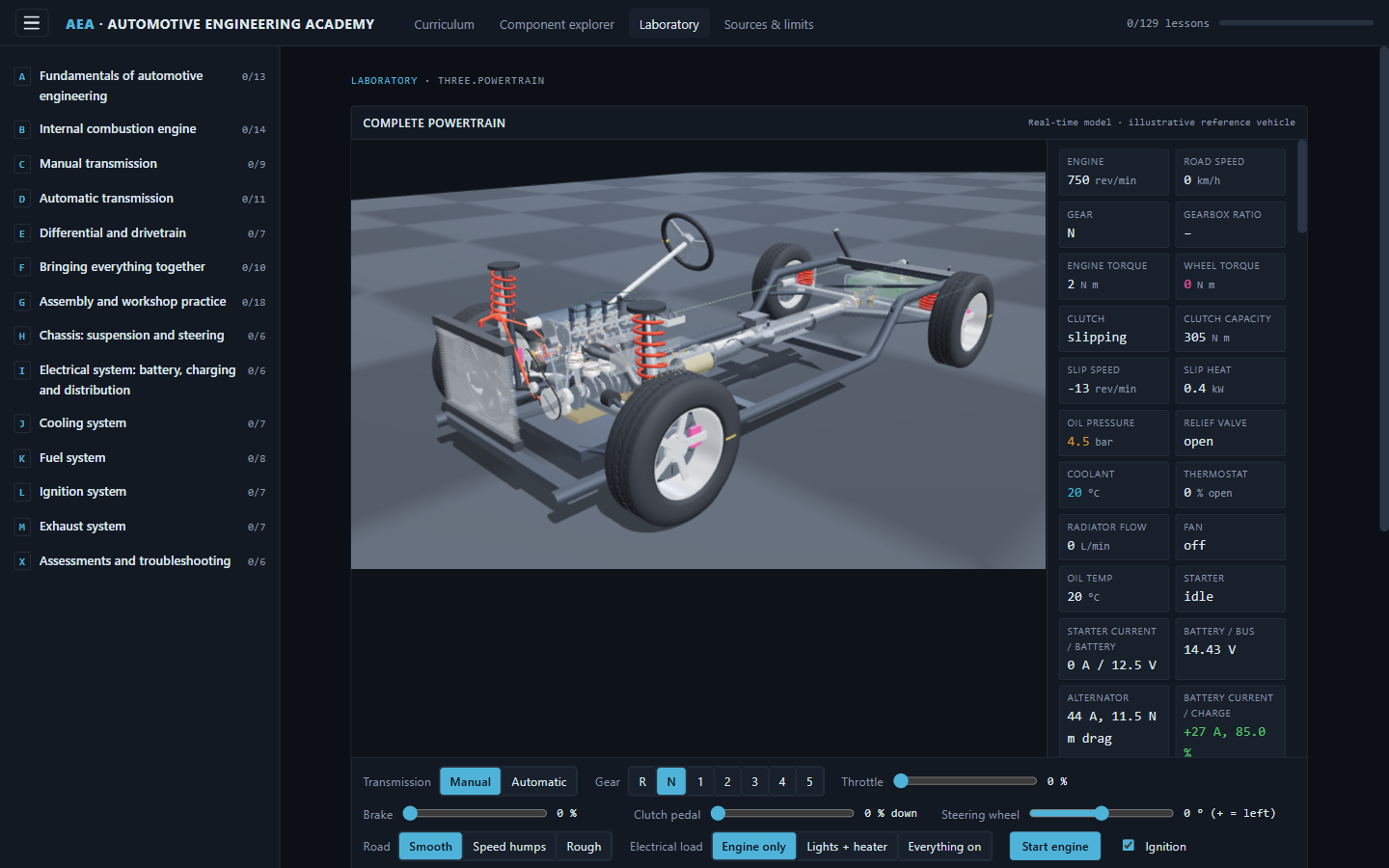
Most explanations of how a car works are pictures and hand-waving. This one is built the way an engineer would want to learn it.
Gear ratios, valve timing, clutch slip, coolant flow, charging current: each one is computed by a separate, tested simulation, and the drawings only show what it computes. If an animation is wrong, a test fails.
A number is either a physical law, a typical range, a value from the course's own reference design, or something only the manufacturer's manual can give you. Nothing pretends to be a spec it isn't.
Each module builds on the last: forces and materials, then the engine, gearboxes, drivetrain, chassis and every supporting system, until they come together as one working vehicle you can drive.
Each lesson pairs short, plain text with a live model you can play with, and cites its sources. The modules run from fundamentals through the engine, manual and automatic transmissions, the differential and drivetrain, suspension and steering, the electrical, cooling, fuel, ignition, exhaust and brake systems, workshop practice and a final assessment.
For each part: what it's made of and how, what it does and how it works, how it fails, and how it is inspected, measured and assembled, highlighted in an animated drawing of its system.
Every simulation in one place: the four-stroke cycle with a combustion model, gearbox power flow and synchronisers, planetary sets and the torque converter, charging, thermostats, injection, ignition timing and knock, brake balance, disc heat and ABS, and a virtual engine assembly bench.
The engine, both gearboxes, the drivetrain and each system can be rotated, exploded and cut away, and all of them come together in the complete car.
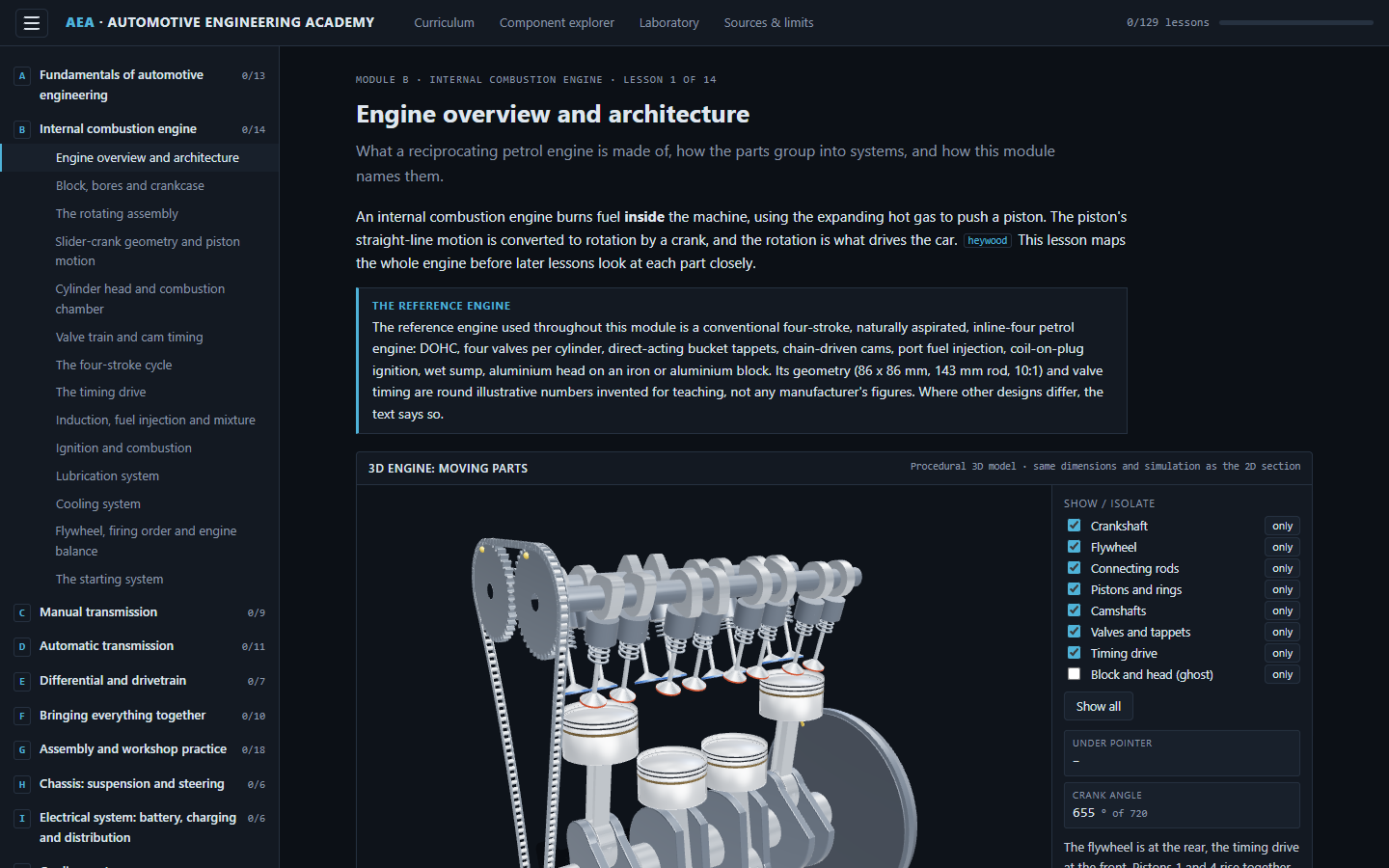
The castings and parts are modelled in Blender from the same dimensions the code uses, then checked by measurement: the case clears every gear, the bolt holes line up. No photographs or manufacturer drawings are used anywhere.
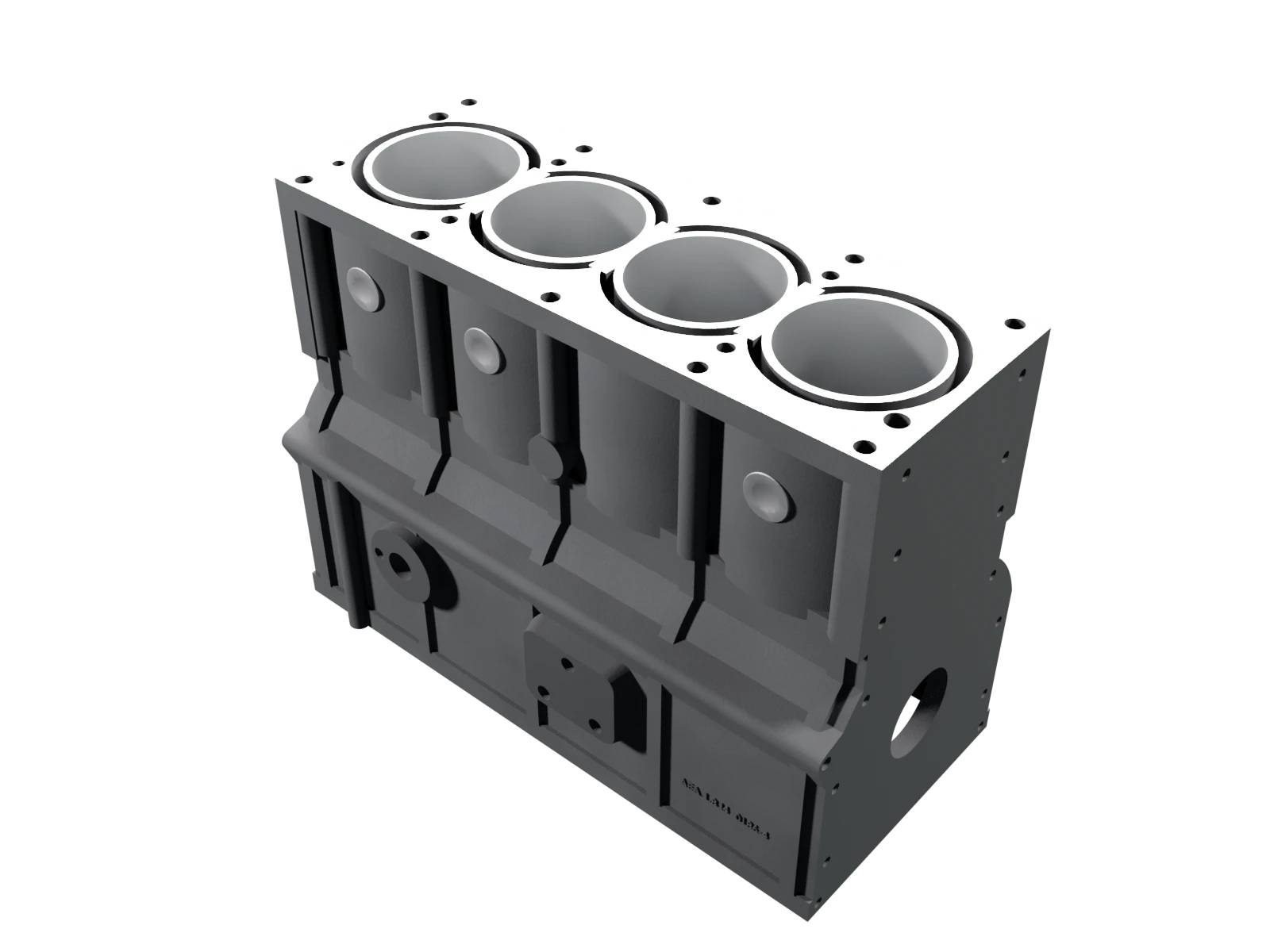
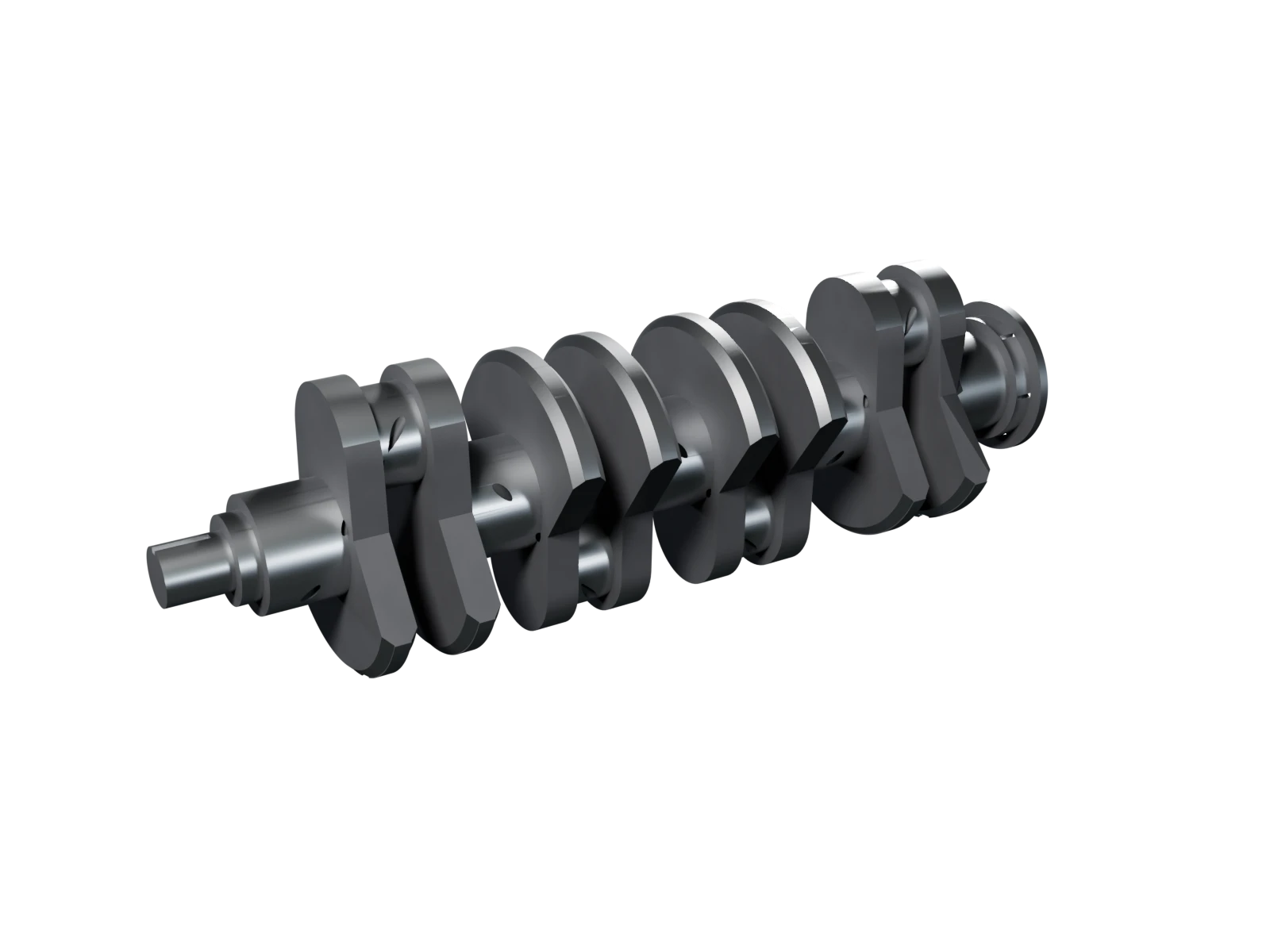
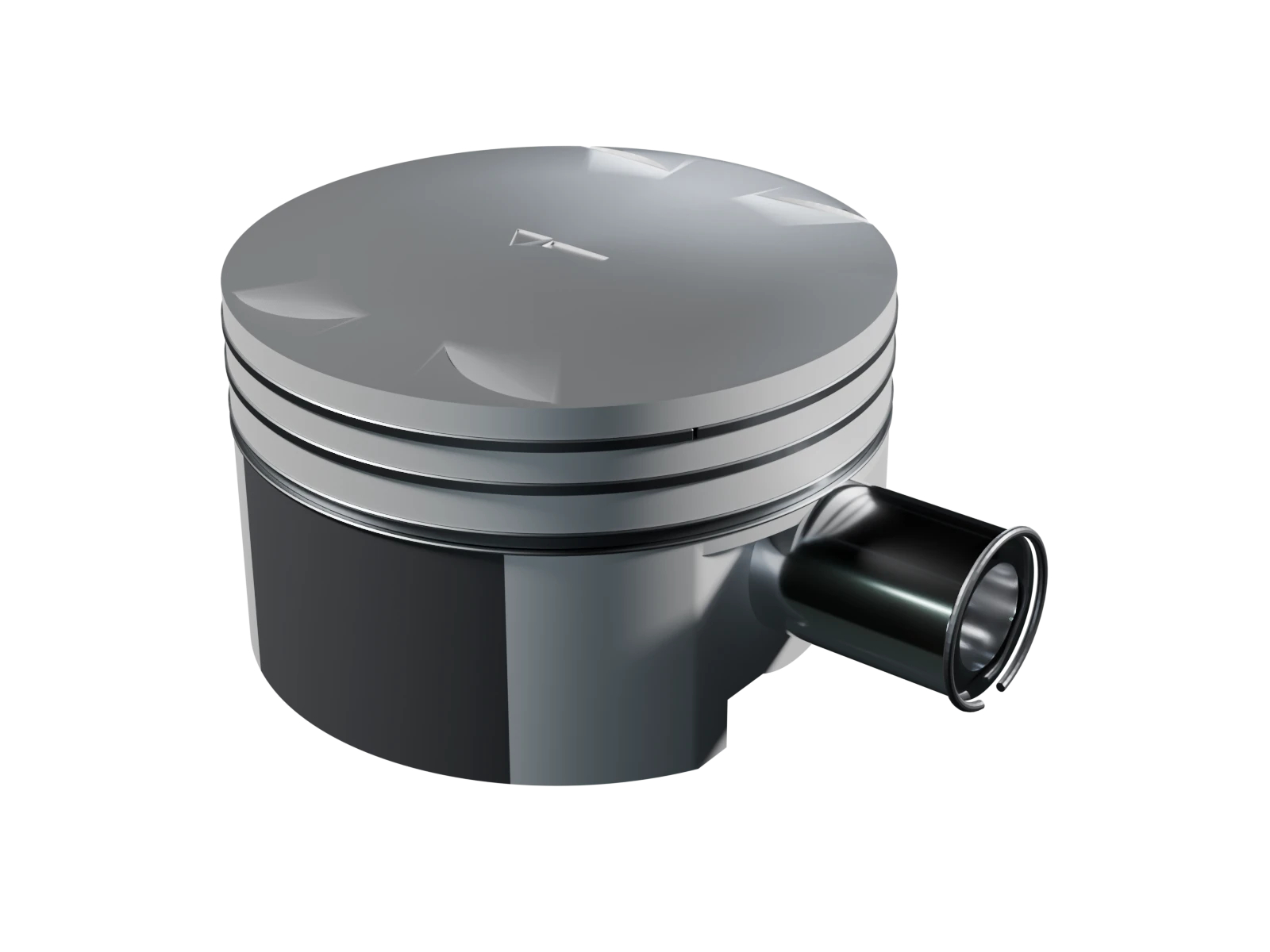
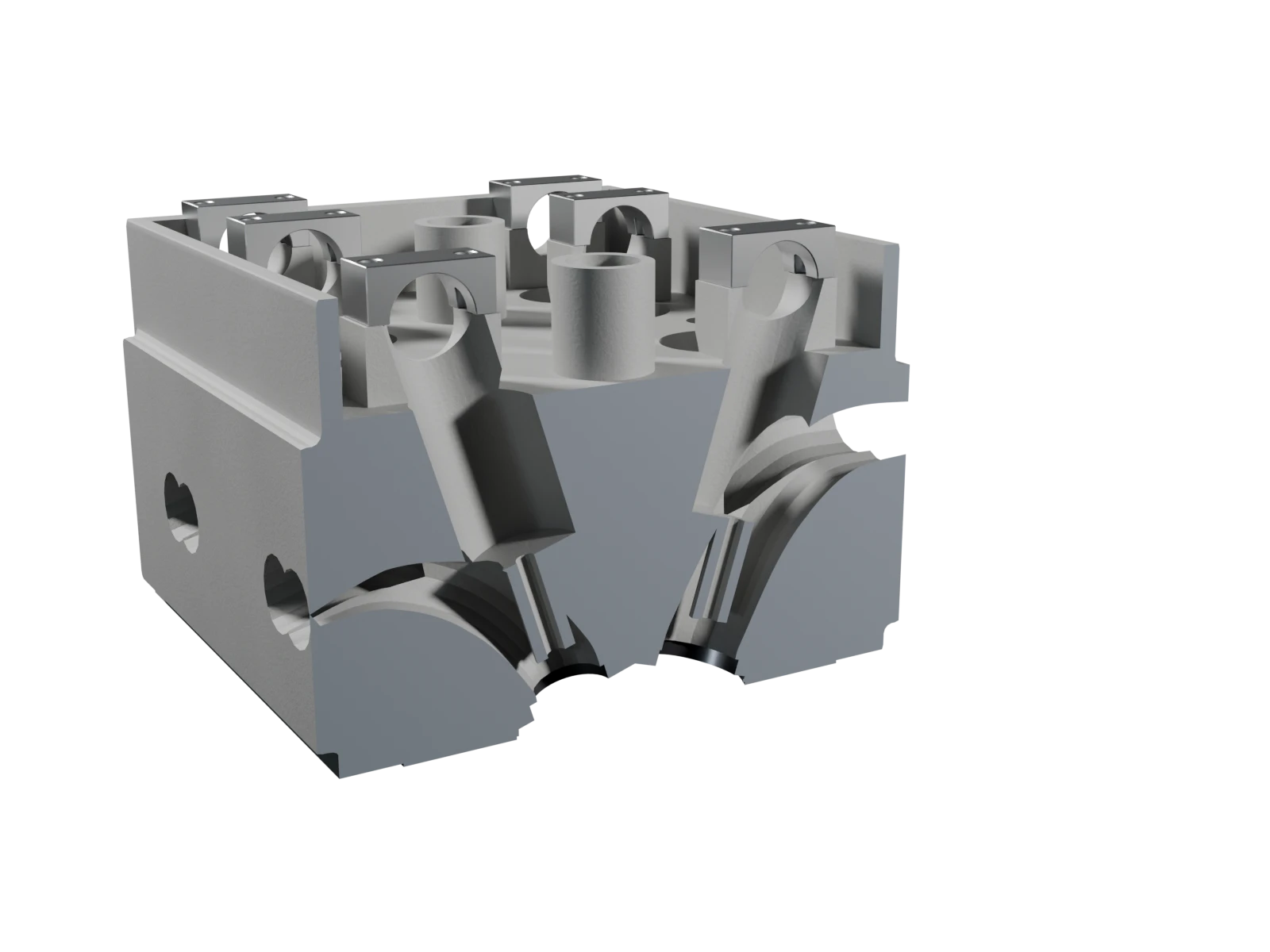
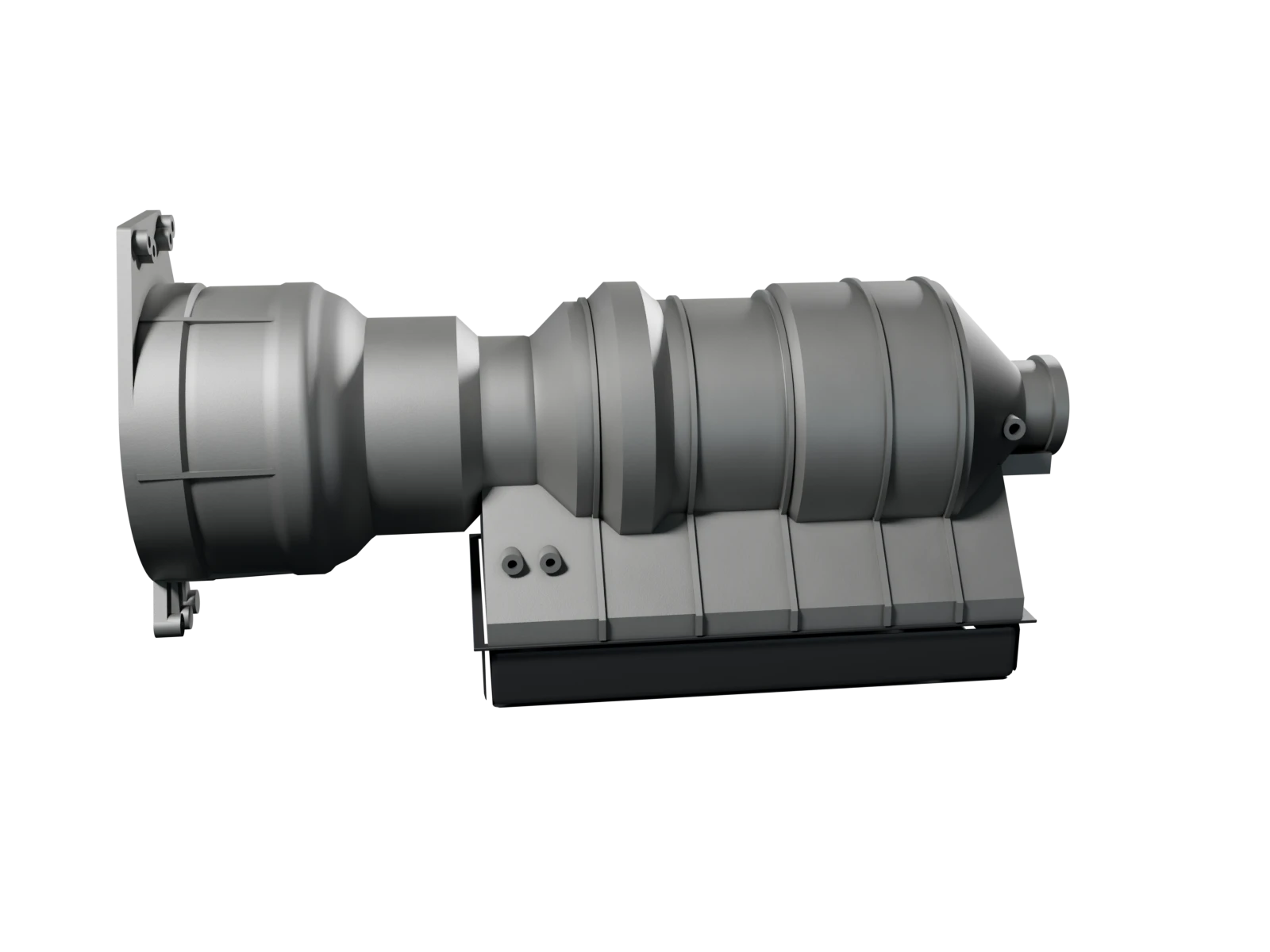
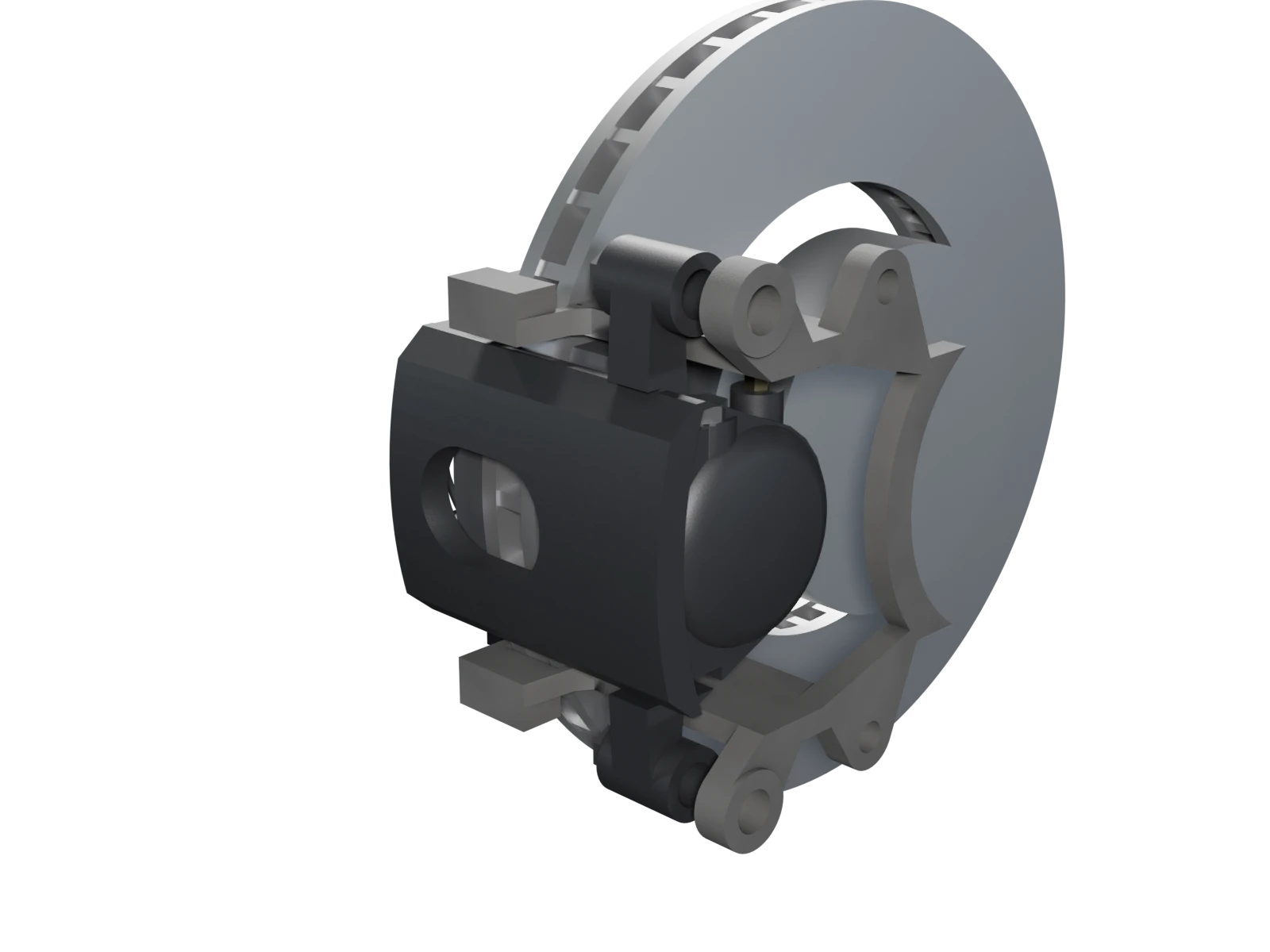
Renders of the course's illustrative reference design, not real parts.
You won't find torque values, clearances or tightening sequences here, on purpose. Those belong to the manufacturer's documentation for the exact vehicle in front of you, and the course teaches you how to find and use them.
Every animation and worked number is checked by tests against the course's own models; the lessons have not yet been reviewed line by line by an outside expert.
Start with the fundamentals, or go straight to the laboratory and take an engine apart.
The academy is free and built in my own time. If it helped something click, you can buy me a litre of oil: it keeps the engine running, with more systems, better models and every lesson checked against its references.